
Review: Robert Dallas Gray, "Missals"
I wrote this months ago but never found a place for it, so let this be its resting place. I think the idea that music reviews need to be roughly contemporaneous with the release of the music itself is a silly one, and publishers ought to be more flexible about publishing pieces on albums a few months later, after the writer has spent a lot of time with the music. There is no zeitgeist anymore, and they don't need to fear missing it.
Yura Yura Teikoku in the 21st Century and the outer limits of rock'n'roll
This article was for an Ele-king special edition on Japanese singer-songwriter Shintaro Sakamoto. Sakamoto has always been a presence in my musical life here in Japan, both as a solo artist and through his old band Yura Yura Teikoku. He lives in my neighbourhood and his mural adorns the walls of my nearest local live venue the UFO Club. Yura Yura Teikoku are a foundational band for a lot of the musicians around me, and he's one of the most impressive Japanese live acts I've ever seen.
The Sound of the Suburbs
This is a piece I wrote for a collection of essays and stories on the loose theme of Tokyo and which looks now as if it might not end up coming together, so in the meantime the publisher told me it's OK for me to post it online just to give it a little air.
Mark Fisher and Music's Garden of Forking Paths
I wrote this piece as another of the short, more friendly pieces of cultural interest content that Ele-king uses to take the soften the blow of all the heavy, academic text that's where the real substance is in their books of essays on political and social issues or touching on critical theory. The book came out in December 2025 and was either titled "Critical Theory, Marxism and Cultural Studies in the UK" or "When Popular Culture Meets Radical Thought: An Introduction to Mark Fisher and Contemporary British Thought" or both.
What the Hell is "Tokio"? — The roots of technopop
This piece was originally for the regular edition of Ele-king, which focused on technopop this autumn. As usual when writing about Japanese music for Japanese magazines, the value of my insight mainly comes from my outsider's perspective (despite, from this year, my having lived more of my life in Japan than I did in the UK prior to moving here!) so I took the differences between UK synthpop and Japanese technopop as my starting point.
Sayonara Amerika, Sayonara Nippon
This is an article I wrote for an Ele-king special edition on the broad topic of "America". Most of the essays in the magazine/book were by serious academics, and I was in there really as a bit of light colour. The theme of the article was one that had been knocking around in my head ever since the bleak nihilism of the last US election landed and started rippling out into the world, and originally started as an idea for a DJ event where no American artists would be played, as a way of starting to imagine what a post-American pop universe might sound like.
Music For Tourists - liner notes
Roughly every 3-4 years, my little indie record label, Call And Response Records, releases a compilation album. Some of them have specific themes like covers of a particular artist, or marking a particular milestone in the label's life, or in one case both. Most of them are broader expressions of What We Like, and by extension a window from our specific viewpoint into the Japanese indie music scene.
In Search of Lost Sounds: A Love Letter to Japan's Underground Compilation Albums
This is an article I wrote for Japanese music magazine Ele-king, the Japanese version of which appeared in its Summer 2024 paper edition. The theme of the issue was "outsider music", though the editor allowed us to define that term as freely as we wished. Since there's no English version available, I'll post it here for my wonderful fans who definitely exist.
Can changed my life
As you get older, social media can become a cavalcade of tributes to the dying heroes of rock, and it's easy to tune it out. The death of Damo Suzuki this year hit me hard, though, partly because he was one of the rare ones I'd actually met and spoken to. More than that, his vast network of sound carriers had included many people I know, so his musical spirit had touched the lives of many people around me in tangible and untangible ways.
I hadn't written for The Japan Times in many years, mainly because I can never be bothered to pitch stories, but I'd interviewed Damo for them in the past and always enjoyed talking to him. Perhaps remembering that, the JT found my email address, possibly under a stack of dusty indie band CD-Rs somewhere, and asked me to write his obituary.
OBITUARY: Damo Suzuki forged a path outside of mainstream pop and rock
Before the sad news of Damo's death, I'd already been writing about Can because of the new live album Live in Paris 1973, released by Mute Records in the UK and with a Japanese edition from Traffic. The Berlin-based writer Wyndham Wallace wrote the official liner notes for Mute, but thanks to Japanese labels' convention of having a local-based writer contribute additional notes to the Japan release, Shoe from Traffic asked me to write an essay of my own about the album. If you buy the album, you can see Wallace's article in English and Japanese, but since mine's only in the Japanese booklet, the label have kindly allowed me to post the English text here.
I am still a writer (but a bad blogger)
My last update to this site was three years ago. This is partly because no one really reads blogs anymore, and author websites are only really useful for active authors. This second part is relevant because I do actually have a new book on the way, which means I've also remembered this website exists.
I've also remained active in my other writing work over the past few years, primarily for Ele-king magazine. Some of them are available online, while others were published only in the paper edition, but here's a rundown of what has been published, with links to the articles where possible:
Trying to avoid avoiding writing in 2020
This year was quite a dry one as far as my writing went. I’ve never been much of one for pitching articles to magazines in the first place — I’ve never really got over the nagging sense that writing about music is a stupid thing to do and feel silly begging for money to do it — and increasingly the conversation about music in Japan is one that has little need for my contribution anyway. Instead of worrying about whether my words are helping whatever media outlet it is meet their targets for page views and engagement, it’s far less stressful to retreat from those anxieties and simply write about what I want on my Clear And Refreshing blog.
Making music to escape reality
Writing is work. I mean that in the sense that it's literally my job that pays for the food I eat and the roof over my head, but also in a more abstract sense — even the decision to use an em dash just before this part of the text instead of a colon or semicolon was tiresome and triggered its own mild drizzle of self-loathing. And zoom out to a wider panorama and writing is exhausting; it's where I try to order, make sense of and explain my thoughts about myself and the world, and then once I'm done with it, I stick my name on it like the pompous ass I am and announce, "Here is my wisdom, World: drink deep and rejoice!" Who needs that? No one, and probably not even me. It's tiring. It's work.
Which is fine, because the flip-side of work is play. In any case, a fair amount of my work — the work that gets published with my name on it at least — is really not much more than finding ways
of justifying all the playing I do with a patina of intellectual respectability. And I'm extremely lucky that at the end of 2020 I still have work of any kind, and especially that it's the sort
that I can do from the safety of my room. So if that new reality of life and work spent shut in a small room didn't really change my work, it had a big effect on my play.
Ele-king magazine year-end album roundup
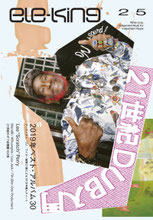
Japanese alternative music and culture magazine Ele-king, for whom I'm an occasional contributor, just published their winter issue, featuring their year-end albums roundup. They asked me to contribute a personal top 10, and while my personal favourites and their rankings are always fluid, this list gives a fair sense of the kinds of thing I enjoyed and listened to a lot this year. The magazine only has the list and a short comment though, so just in case anyone wants to read in a bit more depth, here's the same list with short reviews of each album.
Review: Infinite Detail by Tim Maughan
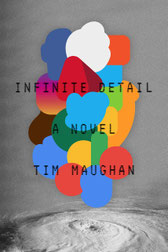
It’s lunchtime in Tokyo and my Gmail account is malfunctioning. Someone is trying to send me a document for work but I can’t download it. A little part of me rejoices: thanks to this technological malfunction, I’m able to spend the afternoon writing for myself, insulated from the sorts of work emails that people feel entitled to invade my personal time with whenever they feel like it.
There’s also a nagging worry though, as I scroll through my Twitter feed, seeing people freaking out over this sudden outage that has denied them access to their Google Drive, email account, documents, or any of the other endlessly expanding range of Google services that our lives increasingly depend on. There’s a more personal edge to that nagging worry for me too, because Gmail is the only direct line of contact I have with my mother, almost ten thousand kilometres away in Bristol in the UK.
Articles I've written since last summer
Work has commenced, albeit in fits and starts, on my second book, but my occasional pieces for The Media are still coming out every once in a while. Here are links to all the ones I can remember.
Quit Your Band! audiobook now available
After a long, long wait, the English audiobook edition of Quit Your Band! is now available. Currently, it only seems to be available via Audible, but I think it's due to go up on iTunes soon.
Me in the media, spring/summer 2018 edition
In addition to occasional writing gigs, and despite Quit Your Band! fading into the past in both Japanese and English editions, I've been featured in a few different things as well over the past few months, in my capacity as a journalist and as a general Tokyo indie scene face. I'll put some links and explanations below:
Recent articles I've written
While this site has been quiet, there has nonetheless been a fair amount going on (follow me on Twitter to get news as it comes in, in among the occasional 2AM political rant). I've written a few articles. Here's a summary:
R.I.P. Mark E. Smith
Following the death at the age of 60 of Mark E. Smith of Manchester postpunk band The Fall, Japanese music magazine ele-king asked me to write an article (an obituary, I suppose), about him. I can't claim a deep or extensive knowledge of his enormous back catalogue of music, but nevertheless I count myself as a fan, not least because he was one of the most extraordinary poets in the English language of the modern era. For Japanese-speakers, the ele-king article is here. I'll post the original English text below the fold.
Quit Your Band! Japanese edition "バンドやめようぜ!" now in stores!
Last week, on the one year anniversary of the English edition’s release, the Japanese translation of Quit Your Band! came out, with the title バンドやめようぜ! ("Band Yameyouze!”)
Quit Your Band! Soundtrack 1 (Japanese Pop 1950-2001)
When writing Quit Your Band! I made a conscious decision that the book wasn't going to be a guide to the music itself so much as a book about the world musicians inhabit and the background against which their music exists. Under this structure, the artists I talk about really function as examples for broader points I want to make about trends in music culture or aspects of how the scene’s infrastructure work, and they fall into two main categories.
Quit Your Band! media coverage
Over the past few months, I've had the interesting experience of being on the receiving end of quite a lot of media coverage about the book, mostly from Japan-focused web sites, magazines etc.
Quit Your Band! book trailer
I've heard that book trailers are a thing, so I made this out of a pile of old film & TV footage, iMovie, and a set of vague memories of Godard from film studies classes.
Strange Boutique (January 2017) - "Happier times in the era of Tetsuya Komuro"
My January column for The Japan Times was about legendary 90s pop producer Tetsuya Komuro, who has a new album coming out and who, since his unceremonious plummet from the limelight, I’ve been finding myself feeling a bit more affection for than I used to at the pinnacle of his 90s ubiquity.
You can read it here.
Strange Boutique (December 2016) - "The best of Japanese indie in 2016"
A bit late posting this, but my 2016 indie roundup column for The Japan Times is available to read here.
My short fiction featured in Colony Drop: Patlabor The Fanzine
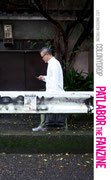
I’ve been a longtime fan of delinquent anime blogosphere bad boys Colony Drop, so when they asked me to contribute to a special zine they were putting together
focused exclusively on Patlabor (the best robot anime ever made), I jumped at the chance – which is to say I procrastinated for about a year and then jumped at the chance.
In any case, the zine is now out, and the short story that closes out the zine was written by me (yes, my first ever published fiction is anime fanfiction, and I’m proud of that). You can buy it here.
Strange Boutique (November 2016) - "A reading list for Japan's music scene"
My Japan Times column for November coincided with the release of my book, Quit Your Band!, so I was faced with the awkward task of trying to tie the latter in with the former without being dreadfully cheesy
about it. The approach I took was, rather than talk about my own book and make the column essentially an advert for myself, to write about other books people have written about music in
Japan.
You can read the article on The Japan Times site here.
Quit Your Band! - Musical Notes from the Japanese Underground
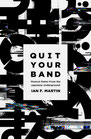
I've been working on this book on and off for two and a half years, and finally it's out -- kind of. The Kindle edition is available on Amazon (and its various local iterations), while the paperback edition exists in a sort of quantum state somewhere between being available everywhere and not existing at all. Once Amazon and other booksellers have processed it and updated their web sites, the probability waveforms should resolve themselves and it will exist in something more than a theoretical state.
Strange Boutique (October 2016) - "Mama’s Tattoo event pushes women to write new narratives"
My Japan Times column for October was about the "Mama's Tattoo" event collective, but also about women in Japanese music in a broader sense.
Read it here.
Creatively avoiding creativity
Hello. This is a web site, and this is me writing on it. I'm a writer, so that's what I do, when I'm not finding creative new ways to avoid being creative. I'll write more on it when I have more writing to write about.